Search Results for "apple"

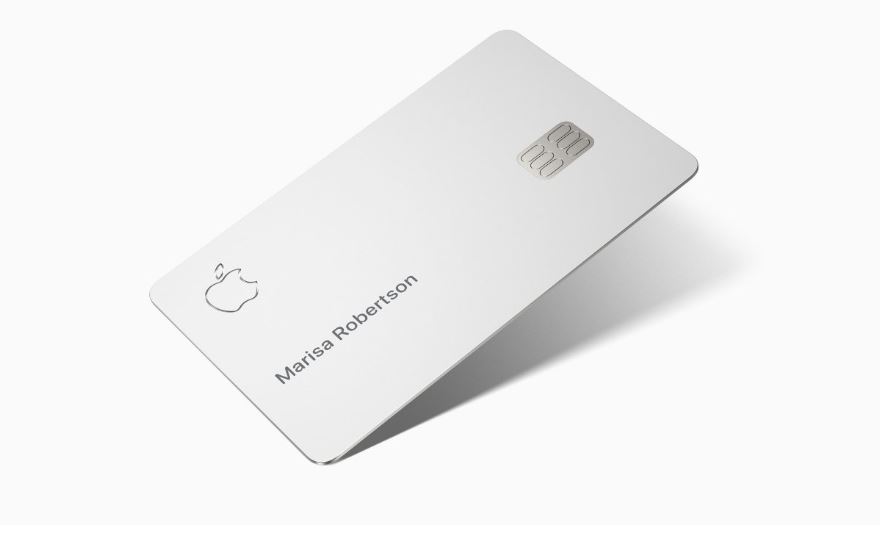
If you haven’t already seen Apple’s new credit card, it’s pretty slick looking.  Obviously, the look of a credit card shouldn’t matter too much. But as with everything Apple, the card’s design is impressive. Take a look for yourself:

Of course, when choosing a credit card, you have to consider more than just how a credit card looks: you need to compare interest rates, fees, perks, and how many businesses accept it.

Apple does fairly well on those fronts too.

The interest rates are comparable to most credit cards. There are no annual fees. It’s accepted everywhere Mastercard is accepted. And as for perks, they’re pretty good (but not outstanding). You get 2% back on purchases you make using Apple Pay (in your phone) when you have the card, and 3% when you buy certain products from Apple. For regular everyday purchases with the card itself, you get 1%. Here’s a more detailed Wall Street Journal analysis, if you’re interested.

But why should Democrats in particular make the switch?

Because credit card companies donate a ton of money to politics—and most of that money goes to Republicans. In other words, if you are a Democrat, and you don’t want a portion of the fees and interest you pay to your credit card companies (and the fees they collect from vendors) to go to Republican candidates you don’t support, then the Apple Card is right for you.

Of all of the categories in our rate yourself political shopping survey, credit cards have one of the highest impacts on politics. Check our credit card category, and you’ll quickly see that all of the major credit card companies either heavily lean Republican or donate a lot of money to Republicans.

Apple and its senior employees, on the other hand, donate over 92% to Democrats.

Now, to be fair, Apple has partnered with Goldman Sachs, who has a more muddled political profile, to bring its credit card to market. But no other credit card company has anywhere near Apple’s high percentage of support to Democrats.

So, if you’re a passionate Democrat that wants to make a political difference with every purchase, take a hard look at the Apple Card. It might be right for you.


Here’s something most companies would never admit: we built something millions of people use, and we’ve never made a dime from it.

Not because we couldn’t figure out how to charge. Because we decided not to.

For nine years, Brian and Abigail, the co-founders of Goods Unite Us, have been covering the gap between what it costs to run this platform and what advertising brings in. That gap has never closed. Ad revenue doesn’t come close. The small group of amazing investors who believe in this mission have been subsidizing it too, along with our incredible team, who donate their time for this cause. And every year, we’ve made the same choice: keep it free.

That choice is why 3 million people have used Goods since the last Presidential election. It’s also why we’re writing this post.


The idea that started everything

In 2017, husband and wife team Brian Potts and Abigail Wuest launched Goods Unite Us with one goal: make corporate political spending impossible to ignore. Their first attempt, an Amazon-style store selling only products from Democratic-leaning companies, failed fast. People weren’t ready to shop somewhere new.

So they changed the approach. Instead of building a store, they built free phone apps and gave the data away. People could keep shopping wherever they wanted, and now they’d know exactly who their money was going to support.

It worked. Half a million users by 2018. Then they stopped advertising entirely in early 2019, and the app kept growing anyway, because once people find out this data exists, they don’t stop wanting it.

Then Trump got re-elected. The apps hit 150,000 downloads a month. By December 2024, they crossed 1 million total downloads. Today: 3 million users and counting.


What you actually have access to

Before we get to the ask, here’s a reminder of what Goods has built over the last nine years:

The website: Free. Covers over 5,000 brands and companies. Shows political giving to PACs and politicians and alternative brands to buy.


The apps: Free on iOS and Android. Rated 4.8/5 with over 40,000 App Store ratings. Search any brand and see where its money goes politically. Track eight social issues with premium. Now the apps also include Voting Report Cards for every federal politician: search a representative, tap Issues, and see exactly how they’ve voted on abortion, gun control, LGBTQ rights, the environment, DEI, Social Security, immigrant rights, and union support. All for free.


DEMZ: In 2020, Goods launched the Democratic Large-Cap Core Fund on NASDAQ (ticker: DEMZ). The goal was to create the S&P 500, minus the companies whose executives and PACs bankroll Republicans. Over its first five years, DEMZ outperformed the S&P 500 by 7.81%, delivering a total return of 113.38%. There’s now $65 million in the fund, but it won’t start fully covering its cost until it crosses about $80 million. The management fee is 0.45%.


IndexAlign: A platform that shows you the politics behind your financial portfolio. Because what you own matters as much as what you buy.

Goods built these tools that millions of people have used almost entirely from founder contributions, outside third-party investor money, and lots of donated time from dozens of wonderful people.


Why free has a cost

Money in politics works because it stays invisible. A company writes a check to a PAC, the PAC funds a politician, and consumers keep spending without knowing their dollars helped pay for it. The only way to create real financial consequences, the kind that make an executive think twice before writing the next check, is to get this information into enough hands that it can’t be ignored.

A paywall cuts the audience. A smaller audience means less pressure. Less pressure means nothing changes.

So we kept the door open. And we’ve been paying for it out of pocket.


The number: 1 in 100

If 1 out of every 100 people who use the Goods apps and website went premium, this company would be sustainable. Not someday. Now.

One percent. That’s all it takes.

We’re not asking you to fund a mission you don’t believe in. You already believe in it; you’re here. We’re asking the 1 in 100 who want to see Goods keep fighting, keep building, and keep the pressure on to make that one small move.


What happens if we don’t get there

We’ve never said this publicly before, so we’ll say it plainly: if the apps don’t reach profitability soon, we’re going to have to put a paywall for the iOS and Android apps up, potentially as early as January 1, 2027.

We don’t want to do that. It runs counter to everything we’ve built. So we’re telling you now, months in advance, because we’d rather give you the chance to prevent it than surprise you with it.

A few things worth knowing: the website will stay free regardless. And any user who goes premium before a paywall goes up locks in their access. But the goal isn’t to monetize the existing audience; it’s to stay free for the millions of people who haven’t found Goods yet.

That’s what’s actually at stake. Not your access. The next person’s.


Five ways to be part of the 1%

The fastest: Share the app with someone you know or on social media

More users mean more discussions about campaign finance and more pressure on brands as a result.

iOS →


Android →


The best: Go Premium in the App — $4/month or $40/year

Premium unlocks the ability to filter every brand search by the specific issues you care about — gun control, reproductive rights, environmental policy, LGBTQ rights, and more. It’s $40 a year, which is less than most people spend on a single dinner out. And it’s the most surefire way to keep this platform running. It’s available in the menu and the Issues tab of any brand.


The coziest: Buy something from our store

Mugs, hats, totes, bomber jackets. Be a force for change in the world and look good while doing it.

Grab something from the store →


For investors: Subscribe to IndexAlign — $19/month

If you have money in the stock market, there’s a very good chance you’re currently funding politicians who oppose everything you stand for. IndexAlign shows you exactly which companies in your portfolio are doing it and helps you decide what to do about it. Investor activism is as powerful as consumer activism. This is the tool for it.

IndexAlign →


The one-off: Give Us Some Money

If you don’t want a subscription, a shirt, or a stock screener but do want to support this project, you can always just give us money. We are not a 501(c)(3) intentionally, but that just means you can’t get a tax deduction for your donation. You can still just support us.

Donate →

Why this moment matters

The last two years have made it clear that money in politics isn’t slowing down. The companies funding the politicians who want to roll back your rights aren’t going to stop. The execs writing those checks aren’t going to stop.

But 3 million people now know who they are. And that number is growing.

The whole Goods team has subsidized that knowledge for nine years. The 1 in 100 who go premium make it permanent.

Your dollar has always been a vote. Now you can cast it with confidence.

 

Way back in 2017 – at its inception – Goods Unite Us tried to create an Amazon for Democrats.

It was a simple Amazon affiliate store that only included products from companies who financially supported Democrats.

Unfortunately, the store failed quickly.

It was just too difficult back then to get people to shop on anything but Amazon.

We also realized that creating a huge store with everything for everyone was not going to be easy.

So, we pivoted.

We developed an iPhone app and gave away our data on companies for free – so people could at least shop according to their politics.

And that worked!

Just this year, over 2 million people have used the Goods Unite Us apps and website to shop according to their politics.

Given this history, when Kirk Bangstad came to us with his idea for the Minocqua Marketplace – how could we say no?

We had to help. And we had to lend our data to the cause.

Goods Unite Us is non-partisan because, as a data company, we don’t want people to question our data and we feel strongly that transparency around corporate money in politics is important on both sides of the aisle.

But that doesn’t mean Goods Unite Us won’t lend its data to political causes! Quite the opposite.

One of Goods Unite Us’s core beliefs has always been that the more people who shop and invest according to their values, the more pressure we will all put on corporations and executives to stay out of politics.

For example, Goods Unite Us already uses its data for the Democratic Large-Cap Core fund, which is an ETF that trades on NASDAQ under the ticker DEMZ.

The DEMZ fund only includes large U.S. companies like Apple who, in conjunction with their senior executives, have contributed more than 75% to Democrats over the last three federal election cycles.

Basically, Goods Unite Us has already helped to create the S&P 500 for Democrats.

Now we need to help create and support an Amazon for Democrats.

The U.S. needs a place where Democrats can shop without worrying about inadvertently funding the politicians undermining their values.

With enough support (Kickstarter Link Here!), we think the Minocqua Marketplace can become just such a place.

Want some empirical proof that Democrats are better at running large organizations than Republicans? We’ve got you.

Back in 2020, Goods Unite Us launched an index fund on NASDAQ called the Democratic Large-Cap Core Fund, with the ticker DEMZ.

The fund is available on all major stock trading platforms including E-Trade, Robinhood, Schwab, and Fidelity.

DEMZ is an unusual, first-of-its-kind financial product.

The fund is labeled “Democratic” because Goods Unite Us tracks each company’s and its executives’ political giving to make sure they’re not bankrolling Republicans.

More specifically, DEMZ can only include an S&P 500 company’s stock if the company’s executives (CEO, General Counsel, etc.) and its political action committee have contributed more than 75% combined to Democratic federal politicians over the last 3 election cycles (roughly 6 years).

That means every company included in the DEMZ fund is run by corporate executives who are Democrats.

Put simply, DEMZ is the S&P—without the GOP.

There are about 100 companies in the S&P 500 that meet the DEMZ 75% threshold. But the fund typically only includes around 40 to 60 of them.

For example, from the Technology Sector, DEMZ currently includes Apple, Nvidia, and Microsoft, all of whom have executives who have contributed overwhelmingly to Democrats pursuant to the publicly available Federal Election Commission data. Conversely, DEMZ does not include Oracle and Dell because their executives have contributed significantly more to Republicans than Democrats.

Ross Stores and Ralph Lauren are included in DEMZ from the Consumer Discretionary sector; right-leaning companies like Tesla and Home Depot are not.

In the Communication Services sector, Netflix and Disney are included in the fund; AT&T and Charter Communications are not.

DEMZ is basically a retirement asset for Democrats who want to put their money in the market without investing in Republican-supporting companies. Or that is what Goods Unite Us and its investment team thought at launch back on Election Day 2020.

However, DEMZ marked its fifth anniversary on Friday, October 31, 2025. And guess what?

DEMZ didn’t just track the market–it has also outperformed it by 7.81% over its first 5 years!
(Compare SPY to DEMZ.)

DEMZ launched at a price of $20.25 per share in 2020, and five years later, on October 31, 2025, DEMZ closed at a price of $43.19 per share.

That’s a 113.38% total return over the 5 years!

While this performance is impressive, it also could be used to argue something else:

Democrats have been better at running large U.S. companies than Republicans over the last five years.

Individual executive contributions comprise roughly 80 to 90% of the political contributions Goods Unite Us tracks, with corporate political action committee contributions comprising the other 10 to 20%.

In other words, DEMZ is filtering companies based primarily on senior executive, c-suite political contributions, and the companies with Democrats in the c-suite have outperformed the entire stock market over five-years.

Does this mean that people should only invest in companies who have Democrats as executives and not look at anything else? Of course not.

But the data says what it says. And it is certainly interesting.

Of course, this all begs the question:

Why have the companies with Democrats in the c-suite outperformed?

There are many possible reasons.

Democrats as a class are typically more concerned about employee rights and corporate impacts on society than Republicans. Democrats in leadership positions could therefore be facilitating better work environments than Republicans.

Democrats as a class are also less likely to challenge and try to thwart government regulation than Republicans—which could lead to less government enforcement and/or less negative publicity towards Democrat-run companies.

Although Democrats in company leadership might be ahead in stock performance, ironically the Republicans are leading in the market demand for these types of political-oriented financial products.

The American Conservative Values Fund (ticker: ACVF) launched within a few days of DEMZ.

ACVF is a large-cap fund designed for investors seeking to align their portfolios with conservative values while maintaining exposure to the broader U.S. equity market.

ACVF has underperformed DEMZ since launch.

But ACVF’s assets under management at the five-year mark were around $138 million.

Comparatively, DEMZ’s assets under management were $51 million—or nearly three times less than ACVF’s.

Democrats therefore might be better at running America’s largest companies. But so far, they have not been better at putting their investment money where their vote is.

Carefully consider the fund’s investment objectives, risk factors, charges, and expenses before investing. This and additional information can be found in the fund’s summary or full prospectus, which may be obtained by calling (888)-750-DEMZ (3369) or by visiting Demz.fund. Please read the prospectus carefully before investing.

Investing involves risk, including the possible loss of principal. There is no guarantee or assurance that the methodology used to create the Index will result in the Fund achieving positive investment returns or outperforming other investment products.


One of Goods Unite Us’ co-founders, Brian Potts, just released a podcast called Give and Receive!

The podcast is hosted by Brian, a serial entrepreneur and lawyer, and a top self-compassion and science of the mind expert, Elizabeth Pyjov. The podcast’s goal is to teach you how to be successful—and be happy.

Elizabeth is a founder, CEO, theologian, lawyer, facilitator, published poet, and business school faculty who holds three Harvard degrees, speaks five languages, has lived in seven countries, and has created over a hundred different programs for happiness, energy, connection, and resilience. Through her organization Lead with Compassion, she has reached over 20,000 people.

In addition to founding Goods Unite Us (and making silly TikTok videos), Brian is a partner with Husch Blackwell but is probably best known for being a mentor and a connector. He serves as a resource to anyone he can help in any way. He loves connecting clients and potential clients with investors and likely business partners (as well as other lawyers), and he is the founder and board chair of The Legal Mentor Network.

As a law student, Brian was rejected by each of the top 100 law firms in the U.S.—including the one where he made equity partner less than a decade later. After posting about this experience on LinkedIn in 2020, he found himself inundated with requests for mentorship. Over the next few months, he built a nationwide network of attorneys willing to mentor law students and recent J.D. grads for free—which formed the beginning of the now-nationwide Legal Mentor Network. Brian has since connected thousands of mentors and protégés through the program, personally mentored more than 1,000 individuals, and helped thousands of others obtain mentorship.

The podcast is available on Spotify, Apple, YouTube, and anywhere you want to listen.

Congratulations Brian and Elizabeth!

Last week we released a new, premium version of our popular iPhone app!

This lets you track corporate money in politics all the way to the specific issue you care about!

Here are screenshots showing how Costco and Target each do on the issues:

This issue data comes directly from our premium finance platform, IndexAlign.

The thumbs up or down means the company and its executives over the last three federal election cycles have mostly contributed to politicians who have voted for or against the particular issue and/or publicly stated their support or opposition for the issue. A thumb to the side means the same thing but for elected officials taking a neutral position.

Our issue data currently covers about 1,700 companies, and we’ll be adding more every day.

If you have an Android, don’t worry.

A similar premium version is coming very soon!


While Americans remain divided over politics, football is one of the few things we can all agree to love. The Super Bowl LVIII kickoff is hours away, so we are taking a look at the top companies involved this year. We’ll be considering their donation distributions, contribution sizes, and campaign finance reform (CFR) scores to provide a rundown of game day politics.

  1. Kansas City Chiefs: Their political contributions are of medium magnitude, with a CFR score of -35. Donations are rather skewed, with 69% going toward Democrats.
  2. San Francisco 49ers: Their CFR score is 71, but contribution level is minimal. Donations are 100% left-leaning.
  3. Las Vegas Raiders: This year’s Super Bowl will take place at Allegiant Stadium in Las Vegas, which opened just four years ago in 2020. This stadium is home to the Las Vegas Raiders, who have a medium political contribution level, CFR score of 40, and a 54% Republican lean.
  4. CBS: They will be broadcasting the game this year. They have a CFR score of 39 and a 66% Democratic lean in their political spending. They have recently funded Bernie Sanders, Hillary Clinton, and Kamala Harris.
  5. NFL: The NFL has a very high political contribution level with a CFR score of -41, but their donations are evenly split between parties, with 48% going to Democrats and 52% going to Republicans. 
  6. Anheuser-Busch InBev: Bud Light is the official sponsor of the NFL, and the brand has faced massive political controversy over the past year due to their sponsorship deal with transgender influencer Dylan Mulvaney. They have been committed to regaining support from their right-leaning customers, but their political donations are still mostly Democratic at 60%. Contributions are very high in magnitude, and the brand has a CFR score of -71.
  7. Wilson: All of the NFL’s footballs are produced by Wilson. The company does not donate significant amounts to politicians or PACs, giving them a CFR score of 100.
  8. Apple: The official sponsor of this year’s halftime show, starring Usher, is Apple Music. The company has an 85% Democratic lean in political donations, which come entirely from Apple’s senior executives rather than the company itself. They have a very high contribution level and a CFR score of 66.
  9. Verizon: The official network of the NFL has a very high contribution level with a CFR score of -55. They are split evenly in terms of political party, with 51% of donations going to Democrats and 49% to Republicans.
  10. Toyota: This year, Toyota will be advertising their new 2024 Tacoma during the game, because there can’t be a Super Bowl without car commercials! The company has a very high contribution level which is evenly split between parties. Their CFR score is -46.

It seems that no matter which team takes home the trophy this weekend, the true winners are Democrats, with their considerable gains from the brands participating in this year’s Super Bowl.

Here, for your reading pleasure, are the best campaign finance stories from the midterm elections.

(For mobile readers, use the html link to see the articles)


Arizona cracks down on Dark Money

An anti-dark money ballot initiative in AZ passed with an astonishing 73% support.

Arizona voters pass ballot initiative cracking down on so-called ‘dark money’ | Fox Business


Peter Thiel buys a Senate seat

In fairness, he paid for two.

Midterm results: Peter Thiel picks Masters, Vance see mixed results in Arizona, Ohio (cnbc.com)


One dollar, one vote

Thiel wasn’t the only high earner shaping the midterms.

Here are the 10 biggest donors in the midterm elections | The Hill


UAE investigated for breaking US campaign finance law

A campaign finance system so broken, even our allies take advantage.

US intelligence report shows UAE efforts to meddle in American political system: Washington Post | The Hill


Corporations Spent Millions To Support ‘Big Lie’ Candidates

The post-Jan. 6th donation halt is all but over.

Large Corporations Spent Millions In Support Of GOP Election Deniers | HuffPost Latest News


Today Goods Unite Us, a non-partisan political data company, and Quiver Quantitative (Quiver Quant), an alternative financial data company for retail investors, released two new investment strategies on Quiver Quant’s website: the Republican Large-Cap Core Strategy and the No-PAC Large-Cap Core Strategy. 

The Republican and No-PAC (no political action committee) strategies have been designed to mirror the construction methodology used to create the Democratic Large-Cap Core Fund (ticker: DEMZ). DEMZ was launched using Goods Unite Us’s political data in November 2020 and trades on NASDAQ. 

“Having all three political strategies will now allow for an apples-to-apples comparison of Democratic v. Republican S&P 500 performance and comparisons of S&P 500 performance between corporations that do–and do not–use political action committees to influence politics,” Quiver Quant’s CEO James Kardatzke points out.  

If you haven’t heard about DEMZ before, it’s the first investment product designed to replicate the S&P 500, without the GOP. It’s an ETF that strives to provide similar performance and risk as the S&P 500, while including only companies that have made over 75% of their political contributions to Democratic candidates and causes.

“Fundamentally, Goods Unite Us’s mission is to bring transparency to corporate political activities and allow consumers and investors to align their monetary decisions with their politics and personal beliefs,” said Abigail Wuest, CEO of Goods Unites Us. 

Goods Unite Us’s political apps and website have been used by over a million consumers to shop and make purchasing decisions since late 2017. Quiver Quant is one of the fastest growing financial data providers in the country. Founded by twin brothers who recently graduated from UW Madison, Quiver is one of the top financial voices on TikTok and Reddit, and its website has hundreds of thousands of users.

Using Quiver Quant’s website, retail investors will now be able to track and compare the performance, holdings, and key metrics of DEMZ and the new REDZ and No-PAC strategies for free. The next step will be to partner with a proven fund manager to allow direct investment into the REDZ and No-PAC strategies.

“By releasing strategies that allow Republicans to invest in Republican companies, and allow investors who are against money in politics to invest in companies that do not have or fund political action committees, we are helping to ensure that all consumers who care about where their money is going and how it is being used have investment options available to them,” said Ms. Wuest.

Goods Unite Us and Quiver Quant share a city and an interest in providing more transparency around corporate money in politics: how it’s spent, where it goes, and the interplay between the worlds of finance and government.

“We’re excited to bring high-quality campaign contribution data onto our platform, and work with Goods Unite Us to give our users the power to better align their investment portfolios with their political beliefs”, said James Kardatzke, CEO of Quiver.

You can review the performance, holdings, and other metrics for the DEMZ, REDZ, and No-PAC strategies by going here. 

Between November 2, 2020 when DEMZ launched and the end of Q3 2022 (September 30, 2022), the S&P 500 (SPY) was up 8.17%, the DEMZ ETF was up 9.75%, the REDZ strategy was up 12.13%, and the No-PAC strategy was up 23.84%, all net of fees.

You can download a PDF of this press release here.

DISCLOSURE: Goods Unite Us is a non-partisan provider of political data. We do, however, license our data to the fund manager for DEMZ, the index fund designed for Democrats. Therefore, Goods Unite Us has a financial interest in DEMZ. 

Carefully consider the DEMZ fund’s investment objectives, risk factors, charges, and expenses before investing. This and additional information can be found in the fund’s summary or full prospectus, which may be obtained by calling (888)-750-DEMZ (3369). Please read the prospectus carefully before investing.

Investing involves risk, including the possible loss of principal. There is no guarantee or assurance that the methodology used to create the Index will result in the Fund achieving positive investment returns or outperforming other investment products.

The fund is subject to the risks associated with the information technology sector. Such issuers may underperform the market as a whole due to legislative or regulatory changes, adverse market conditions and/or increased competition affecting the Information Technology Sector.

The funds are distributed by SEI Investments Distribution Co, which is not affiliated with Reflection Asset Management, LLC.

Shares of ETFs are bought and sold at market price (not NAV) and are not individually redeemed from the Fund. Brokerage commissions will reduce returns.

That probably depends on your political perspective–and your personal beliefs.

But we looked behind the curtain at the politics of the companies contained in the JUST ETF.  And what we found, well, at this point it was not that surprising. We found another example of a fund marketing itself one way, but including companies that are doing things that do not align with the fund’s marketing story (see here and here for past examples).

What is the JUST ETF?

The JUST ETF launched to a lot of fanfare back in 2018. It seeks to provide broad exposure to U.S. large-cap stocks, with a focus on companies that demonstrate “just business behavior.” Today, the JUST ETF has nearly $300M in assets under management.

What does “just business behavior” mean?

Forbes put together a nice summary of how the JUST ETF picks its “just businesses” in an article it published around the time the JUST ETF launched:

The new fund aims to track an index created by JUST Capital, a nonprofit that does research to find large U.S. companies engaging in “just business behavior.” . . .

Cofounded in 2013 by billionaire investor Paul Tudor Jones II and thought leaders like Deepak Chopra and Arianna Huffington, JUST Capital has surveyed 72,000 Americans to understand the business practices related to environmental, social and governance (ESG) issues that matter most to them. Using those priorities, it scores Russell 1000 companies on 85 ESG metrics like fair pay, job creation, customer privacy and environmental impact.

In one of its initial press releases, JUST claimed it “invests in U.S. companies that are driving positive change on some of the most pressing social issues of our time – including worker pay and wellbeing, customer treatment and privacy, beneficial products, the environment, job creation, strong communities, and more .” On its website, JUST claims to utilize “over 145,000 data points across 88 unique metrics” to score company performance.

Apparently the 145,000 data points that JUST utilizes do not include political giving.

Because there are a lot of companies in the JUST ETF that have funneled millions of dollars to politicians and PACs during the last three federal election cycles.

We don’t consider such activity “just business behavior” (but maybe you do).

For example, by our count, the JUST ETF has a higher percentage of companies that funnel money to politicians through corporate PACs than the entire S&P 500 as a whole, and by a fairly wide margin. In fact, only three of the fund’s top twenty holdings, Apple, Nvidia, and Costco, do not give to politicians through PACs.

JUST’s Politics.

Given JUST’s ESG status – and the politics of its backers, including Arriana Huffington — co-founder of the Huffington Post — one would expect a large majority of the companies in the fund to lean left.

But that’s also not the case.

Here are some examples of the political activities of just a few of the fund’s top holdings:

We’re non-partisan at Goods Unite Us. But we view it as our responsibility to provide transparency. If you think these companies are performing “just business behavior,” then please invest in JUST. Our guess, however, is that most of the current investors in the JUST ETF might view the JUST ETF a little differently now that they know what they’re actually buying.

You can download a full list of the JUST ETF’s holdings here.